There is some noise generated on-site during the construction stage – from the construction traffic and from the pile driving the frame that supports the solar panels into the ground. Once built, there is low-level noise from the site that would only occur during daylight hours.
Some solar farm facilities include a battery energy storage system (BESS) which is typically the highest noise emitting infrastructure within the facility.
Most states require predictive noise assessments to be undertaken for solar energy facilities and BESS to determine if the project is likely to comply with regulated noise limits. This assessment is undertaken during the development stage of a project at which point noise mitigation measures are identified, if required.
The design and siting of a solar farm and its ancillary infrastructure (including BESS) could also mitigate noise impacts from sensitive receptors.
Solar panels are placed on more than 30% of Australian homes and have been on homes across the world for the past 15 years. There is no evidence to suggest there are health issues associated with solar panels.
Victoria, South Australia and the ACT have banned solar panels from landfill. They are required to be taken to e-waste drop off points to be recycled.
Waste from end-of-life solar panels presents opportunities to recover valuable materials and create jobs through recycling.
Solar panels have an aluminium frame, glass, copper wire, polymer layers and a backsheet, siliconsolar cells, and a plastic junction box. The polymer layers seal the panel from exposure to weather but can make recycling and panel disassembling difficult, as high temperatures are often required to loosen the adhesive.
Many of these components can be recycled. Glass composes most of the weight of a solar panel (about 75 percent), and glass recycling is already a well-established industry. Other materials that are easily recyclable include the aluminium frame, copper wire, and plastic junction box.
There are different methods to recycle solar panels, which can include some or all the following three steps:
1. Removal of the frame and junction box
2. Separation of the glass and the silicon wafer through thermal, mechanical or chemical processes; and/or
3. Separation and purification of the silicon cells and specialty metals (e.g., silver, tin, copper) through chemical and electrical techniques.
The industry is new and still growing, with researchers examining how to commercialise recycling to economically recover most of the components of a solar panel. Elements of this recycling process can be found in Australia, but it is not yet happening on a large scale as most solar PV systems are still a long way from end of life.
A number of companies have solar panel recycling facilities throughout Australia such as Elecsome and Solar Recovery Corporation (SRC).
Studies show that impacts of large-scale renewable energy projects are small and temporary, generally limited to the construction phase. Any negative effects typically recover within 3–5 years after project operation begins and some areas even see increased property values due to improved local infrastructure and economic growth.
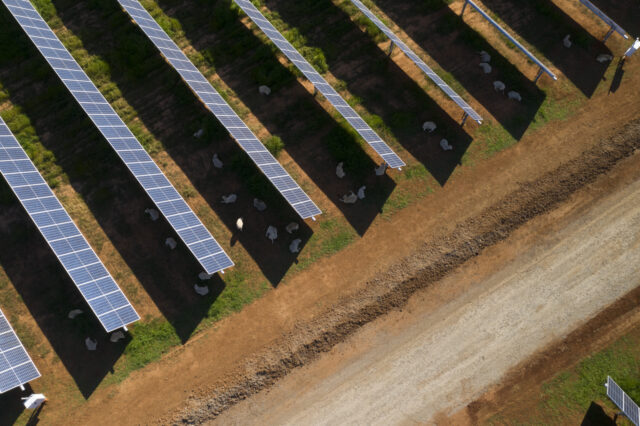
Many solar farms have sheep grazing underneath the solar panels. They happily use the shade in the summer. In March 2021, The Clean Energy Council published the “Australian Guide to Agrisolar for Large-Scale Solar”. This shares the learnings of the solar grazing experience to date and aims to improve the understanding of the opportunities it presents.
During construction a solar farm creates hundreds of direct jobs on the solar farm site. These may include:
• Health and safety officers
• Environmental compliance officers
• Electricians
• Apprentices/ Trades assistants
• Semi Skilled Labourers
• Unskilled Labourers
• Machine operators
• Transport operators
• Crane operators
• Civil and Electrical Supervisors
• Water truck drivers
• Catering
• Cleaning
In addition, hundreds of jobs may be created in businesses that supply the project. These include:
• Quarry suppliers
• Material suppliers
• Concrete businesses
• Electrical equipment suppliers
Construction can also provide a boost for regional communities by increasing demand for local goods and services, such as accommodation, hotels, grocers, restaurants and cafes.
The level of employment depends on the size and location of the solar farm. A small team will be based on-site or in the region to manage the site and provide regular maintenance.
Solar farms can have an impact on the visual amenity of the immediate area. We aim to work with stakeholders to ensure that the impact is mitigated as far as possible.